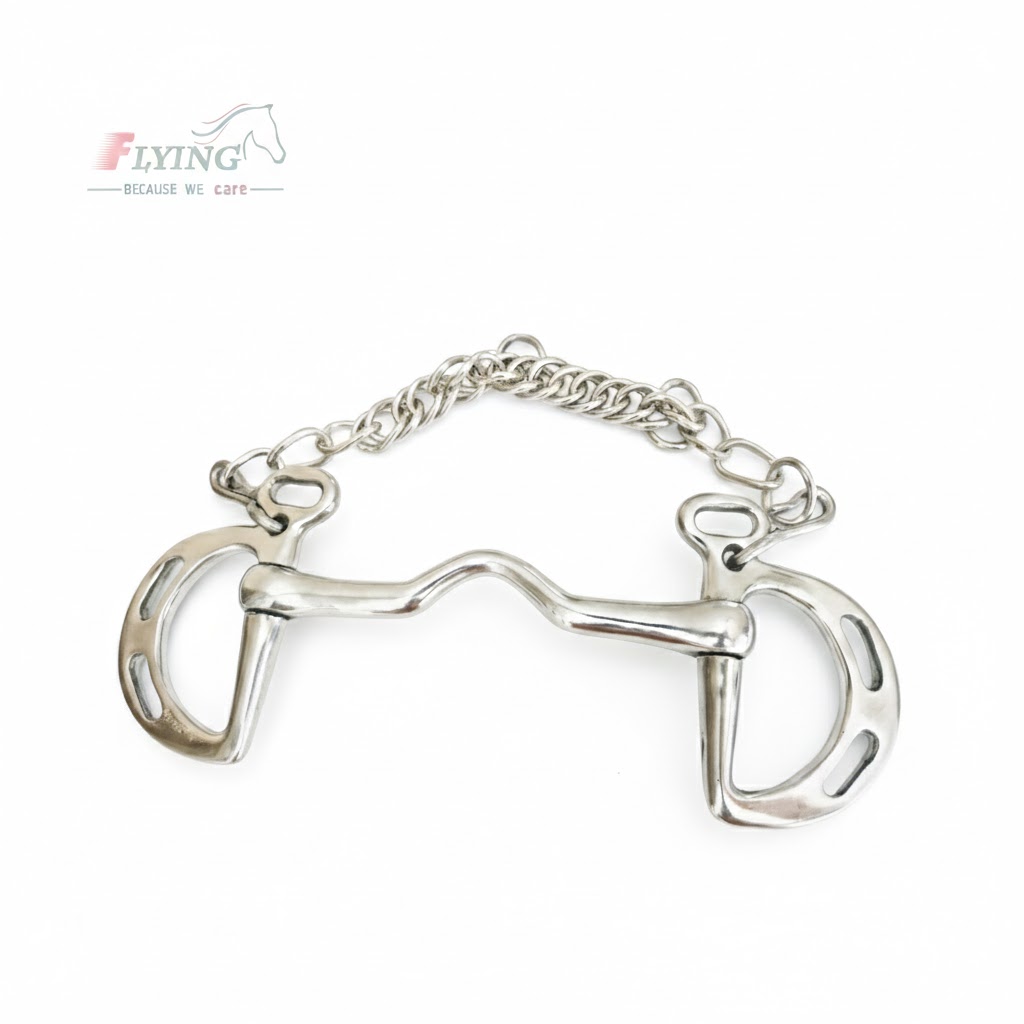
1. Cheekpieces: The Kimblewick has a unique cheek design. It typically has short, straight shanks that connect to the mouthpiece. These shanks have two rein attachment options: a lower slot and an upper ring. The reins can be attached to either of these points, allowing riders to adjust the bit’s leverage effect.
2. Mouthpiece: The mouthpiece of a Kimblewick can vary in design. It can have a jointed or straight bar, and it may also have a slight curve. The mouthpiece is the part of the bit that goes into the horse’s mouth and rests on the bars of the horse’s jaw.
3. Uses: The Kimblewick bit is often used in English riding disciplines such as show jumping, dressage, and hunt seat. It is frequently seen in the hands of riders who want a bit with some leverage but not as much as a traditional curb bit. The two rein attachment options give riders flexibility in how they use the bit.
4. Leverage: When the reins are attached to the lower slot, the Kimblewick acts with less leverage and functions more like a snaffle bit. When the reins are attached to the upper ring, it provides more leverage, exerting pressure on the poll and chin groove of the horse, encouraging the horse to lower its head.
5. Control: The Kimblewick is often chosen for horses that require a bit with some leverage for additional control and collection. It can be a useful tool for riders working with strong or more spirited horses
It’s essential to use any bit, including the Kimblewick, correctly and with an understanding of the horse’s individual needs and preferences. It’s always a good idea to consult with a knowledgeable trainer or equine professional to determine the most suitable bit for your horse and riding discipline. Additionally, make sure that you are familiar with the rules and regulations regarding bit usage in your specific equestrian sport or competition


Reviews
Clear filtersThere are no reviews yet.